Loyalty Tier Mechanics That Bridge Digital Reels, Felt Surfaces, Broadcast Tables, and Athletic Odds in Mobile Applications
Written by Anna Neumann · Jul 21, 2026
Loyalty Tier Mechanics That Bridge Digital Reels, Felt Surfaces, Broadcast Tables, and Athletic Odds in Mobile Applications
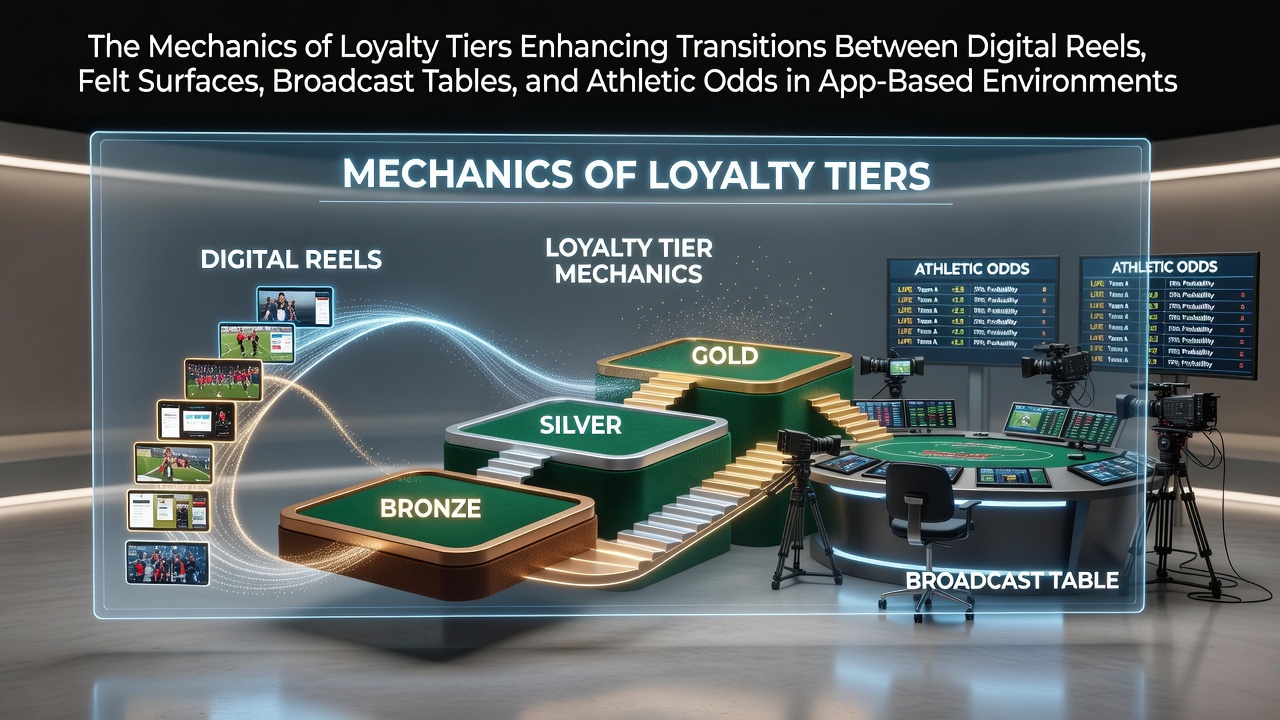
Loyalty tier systems operate as structured reward frameworks inside app-based gambling platforms, where accumulated activity across multiple game categories determines user advancement and unlocks features that reduce friction during switches between digital reels, felt surfaces, broadcast tables, and athletic odds. These systems track participation metrics such as wager volume, session duration, and game type diversity, then apply tier-based multipliers that affect bonus eligibility and transaction speed when players move from one category to another. Data collected by platform operators shows that users who reach intermediate tiers experience automated adjustments in reward calculations, which apply uniformly whether the activity occurs on slot machines, card-based felt games, streamed dealer sessions, or live sports markets. The mechanics rely on a central ledger that logs all transactions in real time, allowing the app to recognize a completed spin on digital reels and immediately credit equivalent progress toward a table game session without requiring separate logins or manual transfers.Point Accumulation Across Game Categories
Points accrue through standardized formulas that assign values based on game type and stake size, so a wager placed on athletic odds contributes to the same tier meter as equivalent action on broadcast tables. Operators configure these formulas to weight categories differently during promotional periods, yet the underlying ledger maintains continuity so that progress earned in one area carries forward when the user opens another section of the app. In July 2026 industry reports indicated that cross-category point systems reduced average transition time between game types by measurable intervals compared with earlier single-game loyalty models.
Users advance through discrete levels, typically labeled bronze through platinum, once cumulative points cross predefined thresholds. Each level activates incremental benefits such as accelerated fund movements between wallet balances dedicated to reels versus those used for sports wagers. The same tier status also governs access to shared bonus pools that can be applied interchangeably across felt surfaces and live dealer streams.
Wallet Integration and Transition Efficiency
Integrated wallet architecture forms the operational backbone that allows loyalty tiers to influence movement between game types. Once a player reaches a qualifying tier, the app activates instant balance transfers that bypass standard processing queues, enabling funds earned on digital reels to appear in the athletic odds section within seconds. This linkage extends to broadcast table environments where live dealer sessions draw from the same unified balance, eliminating the need for manual reconciliation at each switch.

Platform developers incorporate API endpoints that sync tier status with external payment processors, so verified users at higher levels receive priority routing during deposit and withdrawal events that span multiple game categories. Research published by the Australian Gambling Research Centre documented how these synchronized ledgers correlate with higher session continuity rates across integrated apps.
Tier Benefits Applied to Specific Transitions
Higher tiers grant percentage-based reductions in transaction fees that apply when moving value from sports betting markets back into slot reel balances or dealer table credits. The reductions scale with tier rank and remain consistent regardless of whether the originating activity involved athletic odds or felt surface games. Additional mechanics include time-limited multiplier windows that activate automatically upon completion of a qualifying session in any category, extending the value of rewards across subsequent play in broadcast or digital environments.
Operators also embed notification protocols that alert users when tier thresholds near completion, prompting seamless continuation into a different game type rather than session termination. These alerts reference real-time point totals and projected benefits for the next level, calculated across all active categories within the app.
Regulatory Context and Reporting Standards
Multiple jurisdictions require operators to maintain auditable records of how loyalty mechanics influence player movement between game types. Records must detail point formulas, tier thresholds, and the specific benefits granted at each level, particularly when those benefits affect fund transfers involving athletic odds or live dealer streams. Compliance frameworks established by bodies such as the Nevada Gaming Control Board emphasize transparency in these calculations to ensure that tier advancements do not create undisclosed advantages across game categories.
Conclusion
Loyalty tier mechanics function through interconnected point systems, unified wallets, and tier-specific transaction rules that collectively enable fluid movement between digital reels, felt surfaces, broadcast tables, and athletic odds inside app environments. These components operate on shared ledgers that update continuously, allowing progress earned in one category to support activity in others without interruption. Industry data from mid-2026 confirmed that such structures maintain consistent application across platforms while satisfying regional reporting requirements.